Castlecore Aesthetic — The 2026 Interior Trend Explained
Castlecore Aesthetic —
The 2026 Interior Trend Explained
Stone walls. Candlelit corridors. Libraries that feel ancient and alive. Castlecore is not medieval decoration — it is the architecture of emotional refuge, built for a world that has forgotten how to be slow, permanent, and real.
Walking Into the Castle
Picture it precisely: a stone corridor, cool and quiet, lit by iron sconces holding warm amber light. The floor is old, laid in wide dark boards that have absorbed two centuries of footsteps. To the left, a library — not a room with books but a room that is entirely, architecturally, a library, with shelves rising twelve feet and a rolling ladder casting its shadow across spines in burgundy and forest green and the deep ochre of aged vellum. Rain taps against a stained-glass window. Somewhere far off, a fire is burning.
You are not watching a film. This is not Minas Tirith. It is not Winterfell. It is — in 2026, with surprising and completely logical cultural momentum — someone's home. Or rather, someone's deliberately, intelligently designed home, built on the principles of what has become the most quietly significant interior design movement of this decade: Castlecore.
The aesthetic began, as most cultural movements do, at the margins — deep Pinterest boards, obscure design journals, the reading corners and candlelit studies of people who had always felt that modernity was missing something. Now it has surfaced into the mainstream with a force that reveals something genuine about the cultural moment: a profound, broadly shared hunger for permanence, craft, atmosphere, and the sense that a space can tell a story that belongs entirely to you.
"Castlecore is not nostalgia for a medieval past that never quite existed. It is desire for a quality of space that modern design largely abandoned — atmosphere that operates on the body before the mind has had time to evaluate it." — Castle & Craft · Interior Editorial
This article is a serious examination of what Castlecore actually is, why it has arrived at this particular cultural moment, and how to build it — not as a theme-park approximation of a castle, but as a genuine philosophy of atmospheric, story-rich, psychologically intentional living that draws from history, fantasy, and the deepest understanding of what makes a space feel like home.

What Is Castlecore, Really?
The first thing to understand about Castlecore is what it is not. It is not medieval costume design applied to a living room. It is not replica suits of armour in the hallway and faux-stone wallpaper in the kitchen. It is not fantasy cosplay extended from the wardrobe into the architecture. People who approach it this way produce exactly what you would expect: theme-park interiors that feel exciting for twenty minutes and exhausting thereafter.
Castlecore, properly understood, is an atmospheric design philosophy that draws from the emotional vocabulary of historic castle architecture — permanence, grandeur in detail, the interplay of darkness and warmth, craftsmanship as the fundamental design language — and translates it into contemporary, liveable spaces. It asks a single, powerful design question: what would it feel like to live inside a space built to last forever?
The Seven Core Ideas of Castlecore Design
Castlecore is built on a coherent set of design values that distinguish it from mere medieval styling. Understanding these principles is the foundation of any genuine Castlecore space:
The historical references that Castlecore draws from are real and specific. The vertical drama of Gothic architecture. The warm enclosure of a Romanesque hall. The library grandeur of Edinburgh's Advocates Library or the reading rooms of Oxford's Bodleian. The candlelit intimacy of a medieval solar — the private upper room of a castle where the family actually lived, smaller and warmer and filled with books and textiles, away from the public hall below.
And of course, the cinematic versions of these spaces — which have burned themselves into the collective cultural imagination with a vividness that no actual historical castle can quite match. The halls of Rivendell and Erebor in Peter Jackson's Tolkien adaptations. The castles of Westeros in Game of Thrones, built with meticulous attention to the emotional grammar of stone and firelight. The ancestral homes of Harry Potter's world, where every corridor seemed to breathe with accumulated time. These spaces do not simply look like castles. They feel like something ancient, earned, and alive.


Why Castlecore Is Trending in 2026
Every major interior design movement is a cultural diagnosis. Minimalism emerged from the overwhelm of consumer culture. Hygge from the emotional coldness of Nordic winters and the social atomisation of urban life. Cottagecore from the first pandemic's severing of urban populations from the natural world. Castlecore's moment is its own specific response to its own specific cultural pressures — and understanding those pressures explains why this particular aesthetic, with its particular emotional vocabulary, has arrived now.
Digital saturation is the most significant factor. By 2026, the average person in a developed economy spends approximately eleven hours per day engaged with digital screens — a figure that was considered alarming when it was seven, and is now simply the baseline of modern existence. The nervous system was not built for this. The perceptual environment of constant screen interaction — backlit, flat, two-dimensional, high-contrast, relentlessly updating — is the precise opposite of the sensory richness that human beings evolved in and that psychological research consistently identifies as restorative.
Environmental psychology research by Rachel and Stephen Kaplan identifies what they call restorative environments — spaces that replenish depleted attentional resources and reduce stress. Key features include: natural materials, textural complexity, moderate enclosure, visual depth, and the sense of being in a space with a history. Castlecore interiors fulfil every one of these criteria, which partly explains their powerful psychological effect on people accustomed primarily to the digital environment.
There is also the matter of permanence. The digital world offers infinite choice and zero weight — everything is replaceable, updatable, temporary. The Castlecore aesthetic is built on the opposite values: materials that last centuries, objects that carry visible history, spaces designed around the idea that they will be lived in for generations. In an era of algorithmic impermanence, a room built like a castle is a radical act.
The fantasy dimension deserves honest acknowledgment too. A generation raised on Tolkien — whose influence has arguably never been greater, between Peter Jackson's films, Amazon's Rings of Power, and the continuing dominance of high fantasy across gaming, streaming, and literature — has internalised the visual language of castle interiors with remarkable depth. When someone builds a Castlecore library, they are drawing, partly consciously and partly not, on the cumulative effect of decades of beautifully designed fantasy architecture. The aesthetic is emotionally pre-loaded in a way that no purely contemporary design movement can be.
The Environmental Psychology of Castlecore
Why does a Castlecore interior feel the way it does? The emotional response to these spaces — a specific, recognisable sensation of gravitas, warmth, enclosure, and significance — is not arbitrary. It is the product of specific psychological mechanisms activated by specific design features, and understanding those mechanisms is the key to building spaces that produce the response genuinely rather than superficially.
The enclosed quality of castle interiors — thick walls, relatively small windows (in the original architecture), the sense of being held within substantial material — activates what psychologists call the prospect-refuge response: the ancient human preference for spaces that simultaneously offer a view of the surroundings and a sense of protected enclosure. The castle solar, the reading alcove, the window seat within thick stone walls — these spaces are architecturally optimal for the prospect-refuge dynamic, offering warmth and containment while the window maintains visual connection to the larger world beyond.

Fire is central to the Castlecore atmosphere, and its psychological effects are well documented. Watching flames produces measurable reductions in blood pressure and heart rate — effects that persist even with video reproductions of fire, though they are stronger with the real thing. The hearth was the centre of domestic life for most of human history, and the body remembers this: fire signals warmth, food, safety, and the social gathering that all those things enabled. A Castlecore room with a working fireplace is not merely beautiful. It is physiologically calming in a way that no other single design element can replicate.
The weight of stone — even rendered stone, even stone-textured surfaces — communicates permanence, and permanence communicates safety. This is partly cultural and partly biological. Structures that have stood for centuries carry an implicit message: this space has survived. It has outlasted all the things that have threatened it. You are safe within it. This message operates below conscious cognition, but its emotional effect is real and significant. Castlecore's obsession with materials that feel ancient is not mere aesthetics — it is emotional engineering.
The Castlecore Colour Palette
Colour is not merely decorative in Castlecore — it is foundational to the emotional atmosphere the aesthetic creates. Every shade in the Castlecore palette has a specific atmospheric function, derived from the actual colours of medieval and early modern castle interiors, filtered through the cinematic interpretation of those spaces in high fantasy film and television.
Forest Deep — the colour of castle gardens in autumn, of moss on north-facing stone, of the great tapestries that lined medieval halls. Psychologically, deep green produces calm, reduces anxiety, and creates a sense of organic shelter. In Castlecore spaces it appears on walls, in velvet upholstery, in painted woodwork, and in the spines of old books.
Castellan Red / Burgundy — the colour of wine and wax seals and the deep dyes of medieval textile. It is dramatic without being aggressive, and produces a specific interior warmth that no other colour achieves. Used on a single wall, in a curtain, or in upholstery, it transforms the emotional temperature of a room.
Stone Grey — the foundation. Actual stone, rendered plaster, textured wall finishes in muted grey-brown — these are the neutrals that give Castlecore its architectural credibility. They recede, they allow other colours to emerge, and they carry the visual weight of solid, ancient material.
Antique Gold — used sparingly, as hardware, as gilded detail, as candlelight reflected on burnished surfaces. Gold in Castlecore is never flashy or new. It is the gold of old coins and worn frames and the light of a fire catching on a brass candlestick. It provides warmth and visual hierarchy without competing with the deeper tones around it.
The most sophisticated Castlecore spaces use these colours not as individual choices but as a complete system — the way a cinematographer builds a colour palette for a film, where no single element is evaluated in isolation but every colour is chosen for its relationship to every other. Forest green walls beside walnut brown bookshelves beside parchment-paged books beside antique gold hardware: each element reinforcing every other, the whole producing an atmosphere that is unmistakably, cohesively Castlecore.


Architecture and the Grammar of Stone
The most powerful Castlecore interiors are built on architectural bones — the structural and surface elements that create the physical sensation of being inside a space with genuine mass and history. These elements are not merely decorative: they are the primary carriers of the aesthetic's emotional meaning.
The arch is the most important single element in the Castlecore visual vocabulary. Gothic pointed arches, Romanesque rounded arches, the simple brick arch of a cellar doorway — all carry the same essential message: this structure was built to bear weight, to last, and to frame space with intention. In contemporary Castlecore interiors, arches can be introduced through doorway transformation, through painted architectural trompe l'oeil, through the careful placement of arched mirrors, or — in more significant renovations — through actual structural work. Their visual impact justifies the investment at every scale.
Exposed stone — or surfaces that credibly approximate it — creates the foundational material atmosphere of Castlecore. Lime-washed brick, rough plaster, stone tile floors, textured render in grey-brown tones: these surfaces absorb light differently than smooth modern finishes, producing the complex, shifting visual texture that makes a room feel alive at different times of day. They are also tactile in a way that smooth painted drywall is not, and that tactile quality — felt even when not touched, registered by the visual cortex as texture — contributes substantially to the sense of material richness.
Exposed wooden beams carry a different but complementary quality: the warmth of organic material against stone's cool permanence, the evidence of structural logic made visible, the specific beauty of timber that has been worked by hand rather than machine. In a contemporary space, genuine timber beams are transformative. Where they are not structurally possible, substantial faux beams in dark-stained wood produce a convincing visual effect when installed with proper attention to their actual structural logic — positioned where real beams would be, sized to proportions that make structural sense.

The Importance of Craftsmanship
Castlecore is, fundamentally, an aesthetic philosophy that places craftsmanship at the centre of design value — and this is perhaps its most radical departure from the mainstream of contemporary interior design. In a market dominated by flat-pack furniture, mass-produced "vintage" reproductions, and interiors assembled from the same five international retailers, the Castlecore commitment to genuine craft is both countercultural and, from a design standpoint, completely correct.
The difference between a handmade piece and its mass-produced equivalent is visible even when it cannot be rationally articulated. Handmade objects contain what might be called the evidence of decision — marks of the maker's choices about proportion, texture, and detail that are specific to this particular object rather than averaged across a production run of ten thousand. These decisions make the object visually interesting in a way that perfect uniformity never is.
"In a castle, nothing was made quickly or cheaply. Every object was made to outlast its maker. That commitment to permanence — that refusal of the disposable — is what Castlecore is really about." — Castlecore Design Philosophy
For Castlecore interiors, craftsmanship appears in: hand-forged iron hardware — handles, hinges, hooks, candleholders — whose irregular surface catches light differently than cast or machined equivalents; carved wooden furniture, particularly pieces with visible mortise-and-tenon construction where the joinery is part of the visual design; hand-thrown ceramic pieces in natural glazes; woven textiles with visible weave structure; leather goods with patina rather than perfect surface finish. None of these need to be expensive. What they need to be is genuine — made with care, visible attention, and the kind of material specificity that mass production eliminates.
The philosophical position behind this preference is important: craftsmanship is the opposite of convenience culture. Choosing a handmade object over a mass-produced one is a statement about what you value — permanence over efficiency, the specific over the generic, the made over the bought. This is why Castlecore spaces feel, to those who inhabit them well, not merely like aesthetic choices but like ethical ones. The room makes an argument about how to live. And it makes it continuously, in the language of materials and making.
Creating a Castlecore Living Room
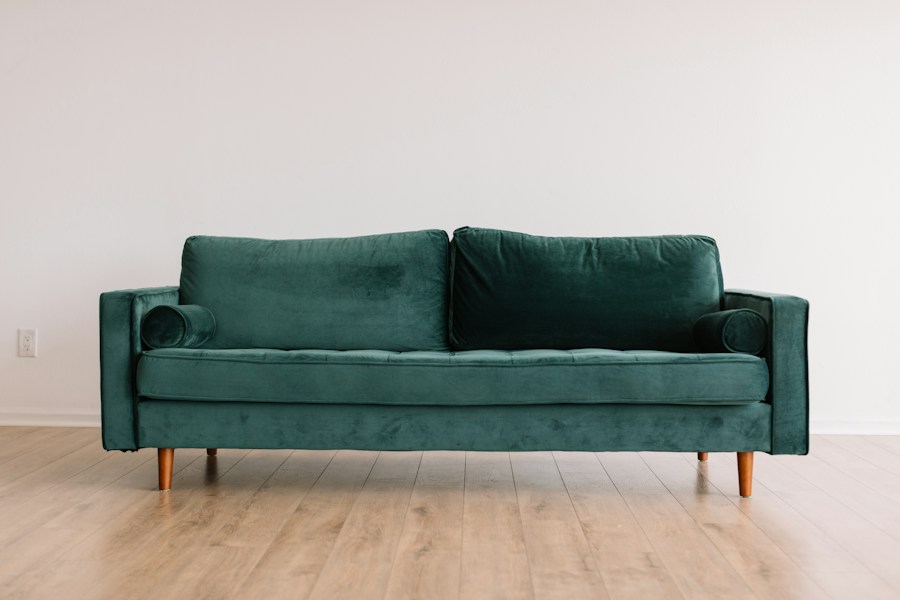
- Deep tufted sofa in forest green velvet or aged leather
- Working fireplace or substantial candelabra as focal point
- Low amber lighting — no overhead lights after evening
- Wooden coffee table — reclaimed, substantial, visible grain
- Woven or tapestry-style rug in deep jewel tones
- Iron or bronze hardware on all furniture
- Bookshelves as architectural element, not storage
- Curtains in heavy linen, velvet, or wool — floor to ceiling
- Multiple light sources — never a single overhead
- Dried botanicals, dark florals, or trailing ivy
- Vintage or antique map as wall anchor
- Leather-bound books left open as invitation
- Candles on every surface — beeswax preferred
- A chess set or old game as active object
- Stone or ceramic vessels — no plastic or acrylic
- Low music — cello, medieval, or acoustic — after dark
The Castlecore living room is built around a single organising principle: the great hall had a hearth, and everything else served the hearth. In the contemporary living room, this translates to an absolute insistence on a focal point of warmth — whether a working fireplace, a substantial candelabra arrangement, or even a well-placed cluster of pillar candles on a stone hearth surround. The room orients toward its warmth source the way medieval architecture always did: with intention, with respect, and with the understanding that fire is not decoration but the psychological centre of domestic life.
Building a Castlecore Library
Every castle had a chapel. Some had a great hall. The finest had a library — a room designed not merely to store books but to create the conditions for serious thought, for the kind of concentrated intellectual engagement that requires specific physical support: good light without glare, quiet without deadness, enclosure without claustrophobia, and the constant visual presence of accumulated human knowledge stretching in every direction.
The Castlecore library is not a room with books on a shelf. It is a room designed around books as its primary material — where the books are the architecture, the shelving is the structure, and the reading chair exists as a throne of intellectual seriousness. The library in The Lord of the Rings' Minas Tirith, the reading rooms of Hogwarts, the personal library of Tyrion Lannister in Game of Thrones — these are not incidentally beautiful. They are beautiful because their designers understood that a library's visual impact is inseparable from its intellectual function.
Elements of the Perfect Castlecore Study
The library is the room where Castlecore's philosophy is most completely expressed. Every element should serve the dual purposes of intellectual richness and atmospheric beauty:
The books themselves are part of the design. This is not aesthetic heresy — it is the recognition that the visual texture of a collection of books, their varied heights and widths and the specific brown-green-red palette of aged bindings, is one of the most beautiful surfaces available in interior design. Organising books exclusively by colour, however, is a Castlecore mistake: it signals that the room is designed for photography rather than reading, which is the fundamental betrayal of the aesthetic's values.

Lighting Like a Castle
Of all the design variables in a Castlecore interior, lighting is the most consequential and the most misunderstood. It is also, crucially, the most accessible: extraordinary atmospheric lighting can be achieved in any space, regardless of budget, without structural work, simply through the disciplined application of a small number of principles.
Principle one: no overhead lighting after dark. Overhead light is institutional. It is the lighting of offices, hospitals, and supermarkets — designed for maximum coverage and task efficiency, producing flat illumination that eliminates shadow and with it all visual depth and atmosphere. Castle interiors were lit from below and the side: from hearths at floor level, from torches and sconces at shoulder height, from candles on tables. This low-angle, warm-source light produced the dramatic interplay of warmth and shadow that makes historic castle interiors feel so immediately cinematic. Replicate it exactly: floor lamps, table lamps, wall sconces, and candles. Nothing from above.
Principle two: warm colour temperature only. The Kelvin scale of lighting runs from warm (2700K, the colour of candlelight) to cool (6500K, the colour of overcast daylight). Castlecore spaces use 2700K or lower exclusively. The difference is not subtle: a room lit at 2700K feels warm, enclosed, and intimate. The same room at 4000K feels clinical and impersonal. This single variable, corrected, transforms the atmosphere of a space more dramatically than any furniture purchase.
Principle three: multiple sources, varying heights. The light in a room with one lamp is boring. The light in a room with a floor lamp, two table lamps, wall sconces, and a candelabra is alive — because the eye moves between sources, because the shadows are complex and shifting, because different objects catch different lights at different angles. This light has the visual richness of a Rembrandt painting, where every surface is interesting because no two surfaces are lit identically.


Castlecore vs Dark Academia
The two aesthetics share significant visual territory — both employ deep colours, warm lighting, wooden shelving, leather-bound books, and candlelight — and they are frequently confused. Understanding the distinction between them is useful both for clarity of design intention and for understanding what each aesthetic is philosophically about.
- Architectural and spatial in emphasis
- Fantasy and history as primary inspirations
- Stone, iron, timber — structural materials
- Grandeur and scale as design values
- The great hall, the library, the tower room
- Tolkien, Game of Thrones, Neuschwanstein
- Power and permanence as emotional registers
- Nature as collaborator — forests, stone, weather
- Intellectual and personal in emphasis
- European universities and literature as inspirations
- Paper, leather, wool — intimate materials
- The scholar's study as design value
- The desk, the notebook, the reading lamp
- Oxford, Paris, Dead Poets Society
- Melancholy and curiosity as emotional registers
- The inner world — thought and text
The most compelling contemporary interiors often blend both — Castlecore's architectural drama and material grandeur with Dark Academia's intellectual intimacy and personal literary culture. The library that is both dramatically shelved and deeply personal; the study that has both the scholar's desk and the stone fireplace. These hybrid spaces are not confused — they are sophisticated, understanding that the two aesthetics serve complementary human needs: Castlecore for the sense of inhabiting something significant and lasting, Dark Academia for the sense of thinking something beautiful and alive.
Common Mistakes That Break the Atmosphere
Replica armour, plastic dragon skulls, "medieval" banners ordered from Amazon. These objects announce the aesthetic without embodying it. They communicate "I have seen castles in films" rather than "I understand what made castles beautiful."
Handmade iron candleholders. A genuine antique map. Books chosen for their spines and their contents equally. Objects that are actually old or actually handmade carry the visual and psychological weight that replicas cannot reproduce.
The impulse to fill every surface because "castles were full of things." Historical castle interiors were not cluttered — they were layered. Objects were placed with specific intention and meaning. Undiscriminating accumulation produces visual noise.
Three significant objects placed with deliberate spacing. A candelabra beside a book beside a small vessel. The empty stone surface is as important as the occupied one. Castle interiors breathed because they knew what to leave out.
No LED downlights at 4000K. No strip lighting under shelves. No harsh overhead light at any colour temperature. Cool light is the single fastest way to destroy Castlecore atmosphere regardless of every other design decision made correctly.
2700K maximum, everywhere. Multiple sources at varying heights. At least one candle burning whenever the space is in evening use. The fireplace, real or represented, as the primary light source. Shadows as intentional design elements.
Castlecore is fundamentally opposed to the seasonal refresh culture of contemporary interior design. A space built on the principles of permanence and craft should not be dismantled because a new trend has emerged. Build slowly, build lastingly, build for decades.
Add one significant piece every few months. Let the space develop through genuine acquisition rather than wholesale decoration. The best Castlecore interiors feel like they accumulated over time — because they did.
Building Castlecore on Any Budget
The most important thing to understand about Castlecore on a limited budget is that the aesthetic's most powerful elements are not expensive. Lighting — the single most transformative design variable — costs almost nothing to change: replace bulbs with 2700K equivalents, remove overhead light fixtures, add a floor lamp. Candles cost less than a meal out and produce more atmosphere than any furniture purchase.
-
01
Transform the Lighting First
Buy warm bulbs (2700K), position floor and table lamps, add pillar candles. This single change, costing under £30, will do more for Castlecore atmosphere than any furniture purchase. Do this before anything else.
-
02
Thrift Shops and Car Boot Sales
Castlecore objects are abundant at thrift stores: leather-bound books, iron candleholders, wooden bowls, old maps, ceramic vessels. These objects carry the visual evidence of age that no new purchase replicates. Shop slowly, choose specifically.
-
03
Textiles Over Furniture
A heavy curtain in dark green or burgundy, a woven rug, a velvet cushion — these transform the tactile atmosphere of a space at a fraction of the cost of new furniture. Hang the curtain floor-to-ceiling even if the window is small: the proportion is architectural.
-
04
Books as Primary Decor
Second-hand bookshops sell hardbacks with beautiful aged spines for almost nothing. Buy them for their visual quality and read them afterward. A shelf of genuine old books is more authentically Castlecore than any decorative object you could purchase new.
-
05
One Significant Wall Treatment
A single wall of dark paint — forest green, deep charcoal, burgundy — costs the price of paint and produces dramatic architectural impact. This one change, anchored by a lamp and a framed print, can transform a room's entire emotional register.
-
06
Nature and Organic Material
Dried botanicals, branches, moss in a glass vessel, pressed botanicals in vintage frames — organic material costs almost nothing and brings the Castlecore connection to the natural world into the space with immediate atmospheric effect.




Spaces Built to Outlast Their Makers
The builders of the great medieval castles were not designing for photography. They were not following a trend or executing a brand aesthetic. They were building for permanence — for spaces that would shelter the same families across generations, that would grow more beautiful as they accumulated time, that would be as meaningful to the great-grandchild walking their corridors as to the founder who laid the first stone.
This is the central, quiet radicalism of Castlecore in 2026: it is a design philosophy that takes permanence seriously in an age of the disposable, that places craft above convenience, atmosphere above efficiency, and meaning above the merely current. It asks you to build slowly, to choose carefully, to invest in objects that will outlast you, and to create spaces that feel like they belong to a story larger than any single season's trend cycle.
"Build your room like you are building something for the centuries. Choose every object as if it will still be in this space when your grandchildren stand where you are standing now." — Castlecore Design Philosophy
The stained-glass window at Mont Saint-Michel has been filtering morning light for nine hundred years. The library at Trinity College Dublin has been accumulating books since 1592. Neuschwanstein's towers have been rising from their Bavarian forest since 1869, built not for practicality but for the pure expression of romantic imagination made permanent in stone. These spaces endure not because they were practical but because they were built with absolute conviction about what beauty means and why it matters.
Your home will not stand for nine hundred years. But it can stand for the quality of attention you gave it — the intentionality of every material choice, the craftsmanship of every selected object, the atmospheric richness of every lighting decision. It can feel, to everyone who enters it, like a space built with conviction rather than convenience.
Light the candle. Open the book. Sit in the room you have been building slowly, one significant piece at a time, and understand what every castle builder across history understood: that the most enduring beautiful things are not found. They are made. Carefully, intentionally, and with the understanding that time given to beauty is never wasted.
Comments
Post a Comment