Plum Noir — The 2026 Colour Trend and What It Says About You
Plum Noir —
The 2026 Colour Trend and What It Says About You
Richer than burgundy. Softer than black. More complex than violet. Plum Noir has arrived at the precise cultural moment it was needed — and the reasons why reveal something fascinating about who we are becoming.
The Colour That Stops the Room
She enters wearing it, and the room registers the colour before it registers her. Not with a jolt — Plum Noir does not announce itself the way red does, with bright intention. It registers more quietly, more lastingly: a depth of tone that the eye has to work to resolve, somewhere between a deep purple and a near-black, with undertones of burgundy and shadow and something that feels, somehow, both ancient and completely current. The room does not stop. It simply pays attention differently.
This is the specific power of Plum Noir — a colour that operates through atmosphere rather than impact, through accumulation rather than immediacy. It is the colour of velvet in a candlelit room, of ink at the bottom of a bottle, of twilight at the precise moment the last blue has left the sky and the dark has not yet fully arrived. It has weight. It has intelligence. And in 2026, it is everywhere.
On fashion runways from Milan to Seoul. In the most carefully photographed interiors on design platforms. In the nail lacquer at the end of hands holding notebooks and coffee cups in a thousand different cities. In the velvet upholstery of reading chairs in homes that are, deliberately and very intentionally, being designed to feel like nothing in the 21st century has felt before.
"Plum Noir is what happens when a culture stops wanting to be seen and starts wanting to be felt. It is the colour of emotional interior decoration — worn or inhabited as a statement of depth rather than visibility." — Noir Palettes · Colour & Culture Editorial
This article is an attempt to understand why. Not just what Plum Noir looks like — though we will be precise about that — but what it means psychologically, culturally, and aesthetically that this particular shade has emerged as one of the defining colours of this particular year. Because colours do not trend accidentally. They are chosen, collectively and individually, for reasons that reveal something about the emotional state of the culture choosing them.
What Plum Noir reveals about 2026 is worth examining carefully.

What Exactly Is Plum Noir?
Colour naming in trend forecasting is always imprecise, but in this case the name is unusually accurate. "Plum" locates the colour in the red-purple family — specifically the deeper, bluer end of that spectrum, away from the warmth of burgundy and toward the cool depth of violet. "Noir" qualifies it: this is plum with the saturation reduced and the darkness increased, the way a room looks when lit by a single lamp rather than full daylight. It is plum at midnight.
On the colour wheel, Plum Noir occupies a specific and narrow territory. Too red and it becomes burgundy — warmer, more romantically historical, the colour of wine and old libraries and the Pre-Raphaelites. Too blue and it becomes violet — more spiritual, more theatrical, more maximalist. Too dark and it becomes black. Plum Noir holds the precise point where all three influences are present without any one of them dominating.
Its undertones are its most interesting quality. Depending on the light source, Plum Noir shifts: in warm candlelight, the red-burgundy beneath the surface becomes visible, and the colour feels almost vampiric in its richness. In cool daylight, the blue-violet dimension emerges, and it reads as more austere, more intellectual. Under artificial light — the kind that dominates most of our interior lives — it holds its depth without committing to either warmth or coolness, which is part of why it photographs so well and why it has spread so quickly through image-based platforms.
Materially, it performs best in fabrics that engage with light rather than reflecting it flatly. Velvet is the canonical Plum Noir textile — its pile catches and absorbs light from multiple angles simultaneously, producing the characteristic depth of colour that makes velvet in this tone look almost luminous in low light. Matte silk, brushed satin, heavy linen, and woven wool are all effective. High-gloss finishes work against the colour's atmospheric quality; Plum Noir wants to absorb, not reflect.


Why Plum Noir Is Trending in 2026
Colour trends are never arbitrary. They emerge from the intersection of multiple cultural pressures — shifts in collective mood, aesthetic reactions to the dominant visual language of the preceding period, economic signals processed through the lens of luxury and accessibility, and the specific emotional needs of a population at a specific historical moment. Plum Noir's 2026 emergence is explicable through all of these lenses.
The most immediate context is aesthetic fatigue. The visual culture of the early 2020s was dominated by a specific palette: millennial pink bleeding into Gen Z yellow, then the beige-and-cream minimalism of quiet luxury, then the hyper-saturated maximalism that followed as a reaction against that restraint. By 2025, significant portions of the design and fashion audience had moved through all of these and were experiencing something that trend forecasters began calling chromatic exhaustion — a weariness with colours that felt either too cheerful, too trend-conscious, or too self-consciously neutral.
Colour trend research consistently shows that periods of social stress and uncertainty drive collective movement toward deeper, more saturated tones in the red-purple-blue family. These colours are associated with psychological concepts of depth, complexity, and emotional interiority — qualities that become culturally desirable when the external world feels unstable or overly demanding. Plum Noir's emergence in 2026 fits this historical pattern precisely.
There is also the quiet luxury evolution. The quiet luxury aesthetic — which defined aspirational visual culture from approximately 2022 to 2025 — was built on restraint: neutral tones, excellent materials, the complete absence of visible branding. Plum Noir is not a departure from this sensibility. It is its natural next chapter. The move from ivory and taupe to deep plum retains the commitment to quality material and the rejection of trend-driven maximalism, while introducing emotional complexity and visual depth that the palette's neutrals could not carry.
The digital exhaustion dimension is equally significant. A generation that spends more time on screens than any previous one — exposed to millions of images, trends, and visual stimuli per day — has developed, paradoxically, a sophisticated need for colour that requires sustained attention. Plum Noir cannot be processed in a glance. Its depth rewards looking, which in the visual culture of 2026 is itself a form of luxury.
The Colour Psychology of Plum Noir
Colour psychology is a legitimate and productive field when approached rigorously — and a deeply unserious one when reduced to personality-type clickbait. The effects of colour on emotion and cognition are real and measurable, but they are also contextual, culturally mediated, and individual. What follows is an honest account of what colour science and cultural analysis can responsibly say about Plum Noir's psychological dimensions.
What the Research Says About Dark Red-Purple Tones
Plum Noir draws its psychological properties from its position between three colour families — red, purple, and near-black — each of which carries documented emotional associations that combine in Plum Noir with specific effects:
The specific psychological register that Plum Noir occupies — and this is where it becomes genuinely interesting — is the register of held intensity. Red communicates passion openly. Black communicates withdrawal. Plum Noir communicates something more complex and more contemporary: emotional depth that is present but not performed, intensity that is real but controlled, the specific quality of a person who feels things profoundly and has learned not to announce it.
This is why the colour has such strong resonance with creative communities. Writers, designers, artists, photographers — people who spend significant portions of their professional and personal lives navigating the gap between inner experience and its outer expression — respond to a colour that lives in that same gap. Plum Noir is the colour of work done privately before it is revealed publicly. Of thought that has not yet become speech. Of feeling that is being processed before it is performed.
What Plum Noir Communicates
Clothing and interior colour communicate. This is not metaphor — it is a finding of social psychology, documented through decades of research into how observers form impressions based on visual cues before any verbal exchange has occurred. The question is not whether Plum Noir sends a social signal. The question is what signal, and with what degree of precision.
Social psychology research on dark, complex colour choices — particularly in the red-purple family — consistently finds that wearers are perceived as: more creative and artistically oriented than wearers of neutral tones; more emotionally complex and psychologically interior; more likely to be making a considered aesthetic choice rather than following a trend; and more confident, in the specific sense of not requiring the external validation that brighter, more attention-seeking colours provide.

None of this is deterministic. A person wearing Plum Noir is not automatically a creative introvert with a rich emotional life. They are making a visual choice that, within the current cultural language of colour, carries those associations — and they are choosing to carry them. This is the more accurate way to understand colour communication: not as revelation of character, but as deliberate alignment with a set of cultural values and aesthetic propositions.
The propositions that Plum Noir carries in 2026 are specific: that sophistication is more compelling than spectacle; that emotional complexity is a quality rather than a problem; that depth of colour, like depth of character, rewards patient attention rather than rewarding the casual glance. Choosing Plum Noir is choosing to align with these propositions — which is why the colour has such consistent resonance with people who hold them.
What it does not communicate — and this is equally important — is coldness, withdrawal, or inaccessibility. The red undertone prevents that. Plum Noir is dark, but it is warm dark. It contains the suggestion of fire beneath the surface. This is what distinguishes it psychologically from black: black is the colour of complete withdrawal from the emotional spectrum. Plum Noir retains the colour's capacity for warmth, for passion, for connection — it simply holds those qualities in reserve rather than projecting them outward.
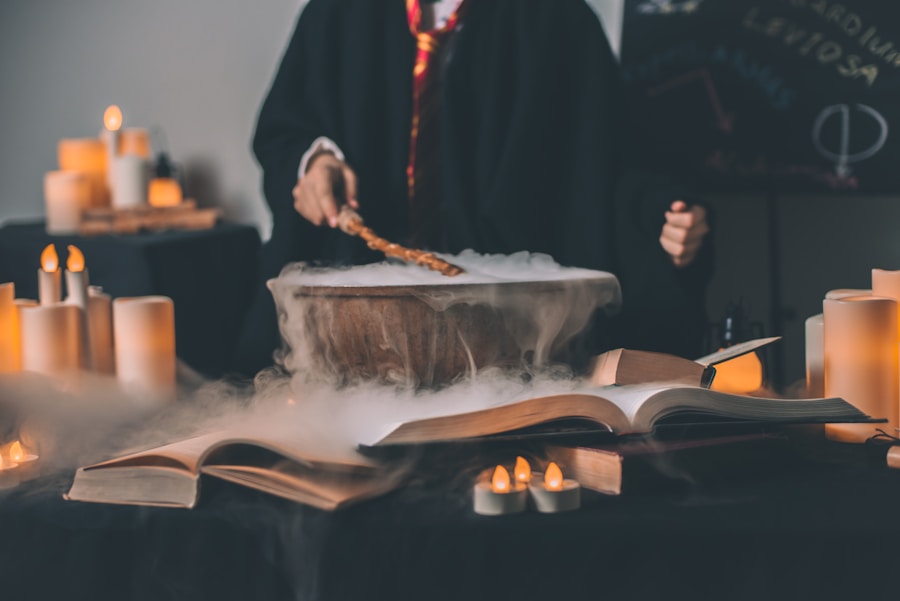
Plum Noir vs Black
- Warm dark — contains suggestion of red and life
- Shifts with light — never the same colour twice
- Communicates emotional complexity and depth
- Creates intimacy in interior spaces
- Reads as creative and psychologically interior
- Works best in texture-rich materials: velvet, linen
- The colour of the private self, held with confidence
- Pairs with gold, ivory, dust rose, espresso
- Cold dark — absolute withdrawal from colour
- Consistent — light changes its finish, not its character
- Communicates sophistication or emotional distance
- Creates drama and formality in interior spaces
- Reads as controlled, authoritative, or anonymous
- Works in almost any material — its strength is versatility
- The colour of the public self, deliberately composed
- Pairs with almost anything — it is a universal neutral
The distinction matters practically as well as psychologically. Black, as a design choice, is closing. It provides a definitive boundary — a wall of black is a full stop, a black dress is an ending, a black room has declared its aesthetic and left no room for negotiation. Plum Noir is opening. Its depth invites question — what is the temperature beneath that surface? What does it look like in different light? — in a way that black does not.
In fashion terms, this translates directly: black is the most versatile colour in the wardrobe, but it is also the most predictable. A black coat in 2026 is a black coat — timeless, perhaps, but offering very little information about its wearer beyond the fact that they own a black coat. A Plum Noir coat is making an argument. It is a choice that required thought and reflects a specific aesthetic position. This is part of its appeal to audiences fatigued by the safety of the classic all-black wardrobe.
Plum Noir in Fashion
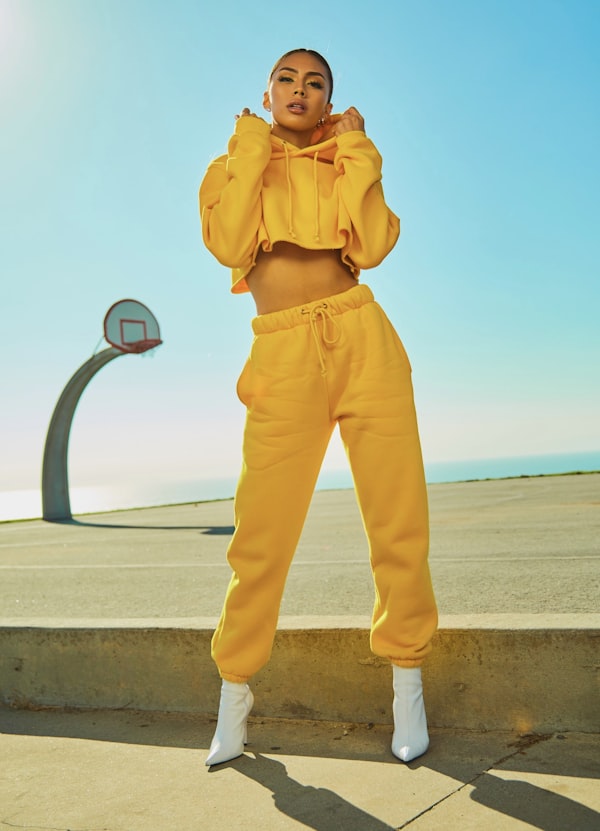
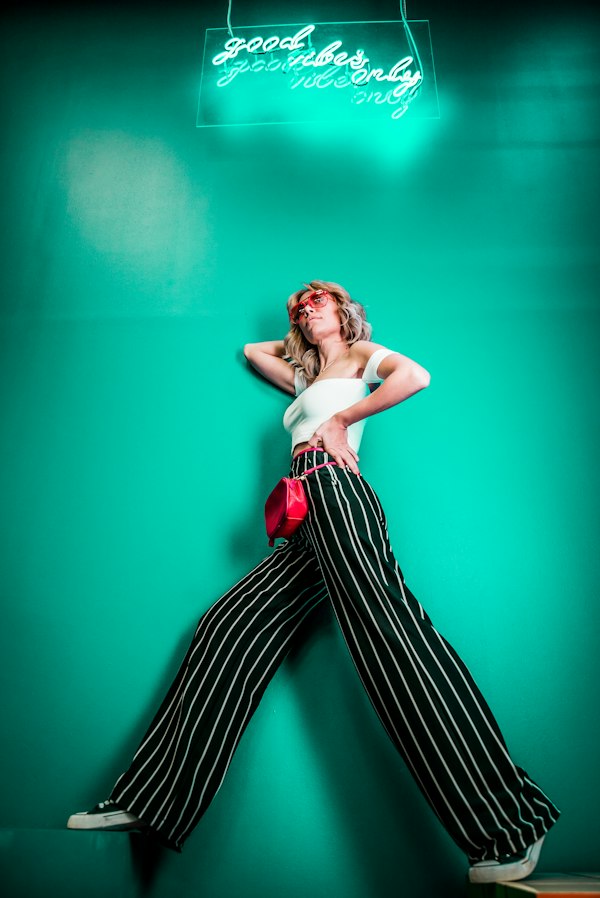
On the 2025-2026 runway cycle, Plum Noir appeared with notable frequency and consistency — less as an assigned trend colour and more as a shared aesthetic conclusion reached independently by designers working from similar cultural inputs. Bottega Veneta's heavily textured knitwear in burgundy-violet. Valentino's velvet tailoring at the near-black end of the spectrum. The quiet luxury houses working in complex tonal dressing that resists easy description as either purple or black. Emerging designers building entire collections around the dark romantic aesthetic that Plum Noir anchors perfectly.
The most compelling Plum Noir fashion applications share a commitment to material richness. The colour needs texture to perform at its best. A Plum Noir coat in heavy boiled wool. A velvet evening dress that makes every movement visible through its shifting tonal depth. A tailored blazer in matte crepe where the colour holds its darkness without the softness that velvet would add. In each case, the material is doing as much work as the colour — which is appropriate for an aesthetic philosophy that is fundamentally about depth over surface.
Fashion psychologist Carolyn Mair's research on luxury colour choices finds that deep, complex tones in the red-purple range are disproportionately chosen by people who identify strongly as creative practitioners, who value uniqueness over conformity in their aesthetic choices, and who are in periods of confident professional identity. The Plum Noir trend in fashion is not merely aesthetic — it reflects a cultural moment of creative self-assertion after several years of uncertainty and retreat.
Accessories in Plum Noir follow a similar logic. A structured leather bag in deep plum. Suede boots that darken at the toe as the light falls away. Jewellery in oxidised silver or antique gold that works with the colour's natural partners. The accessory serves as an entry point for those not yet ready to commit to Plum Noir in larger garments — and often it is more powerful for its restraint. A single Plum Noir element against otherwise neutral dressing creates the same atmospheric effect as a full tonal look, with the added psychological dimension of deliberate understatement.


Plum Noir in Interior Design
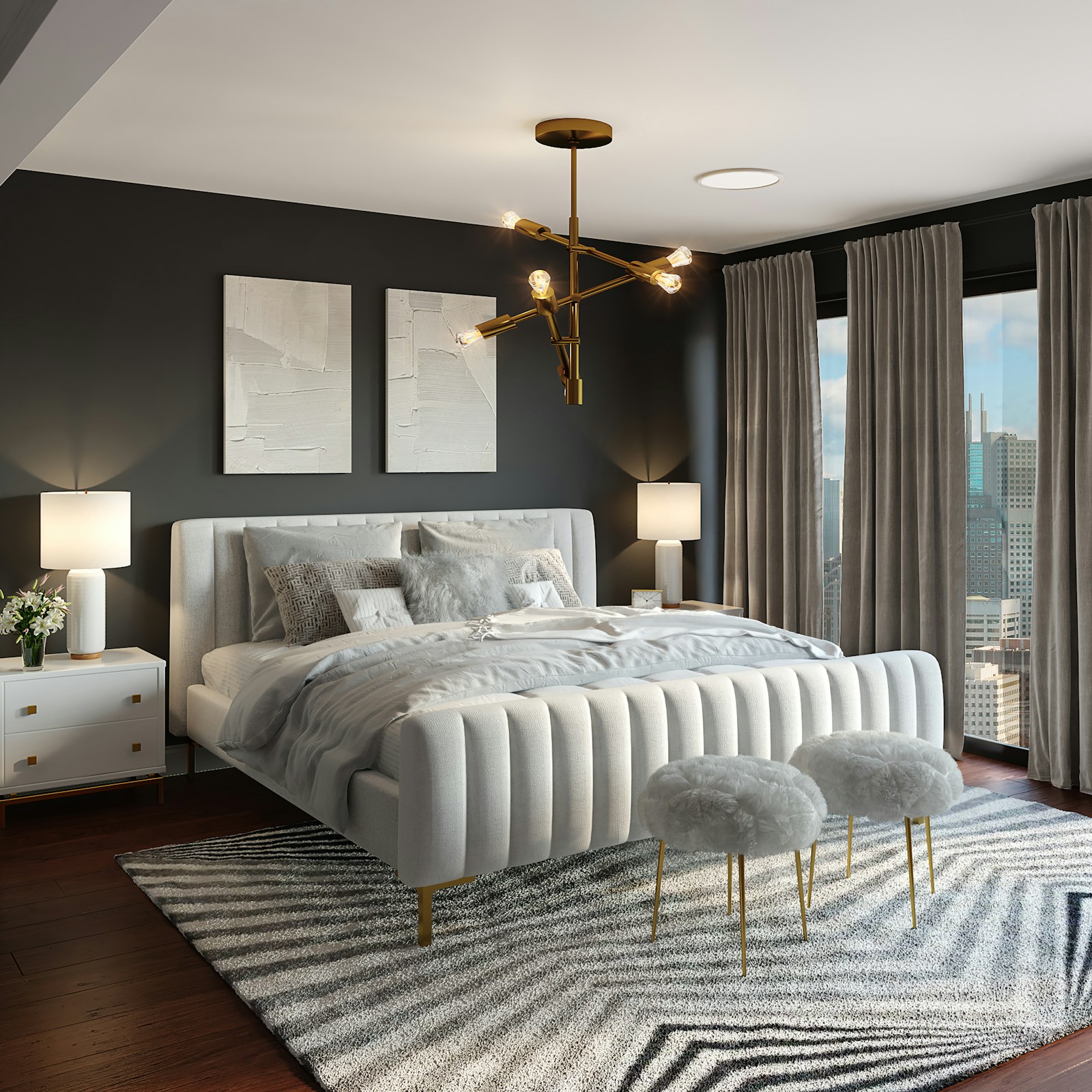
In interior design, Plum Noir behaves with the same atmospheric complexity it demonstrates in fashion, but with the additional dimension of spatial scale. A Plum Noir wall does not simply look dark — it actively changes the perceived dimensions and emotional register of the room it occupies. This is the colour's most interesting and most counterintuitive design property.
Conventionally, dark colours on walls are avoided in small spaces on the grounds that they make rooms feel smaller. This is partially true but dramatically overstated, and misses what dark colours actually do to a room's atmosphere: they create a sense of enclosure that, in the right context, reads as intimacy rather than constriction. A small library with Plum Noir walls, properly lit with warm sources, does not feel cramped. It feels like the inside of a jewel box — enclosed, rich, complete, requiring nothing from the outside world.
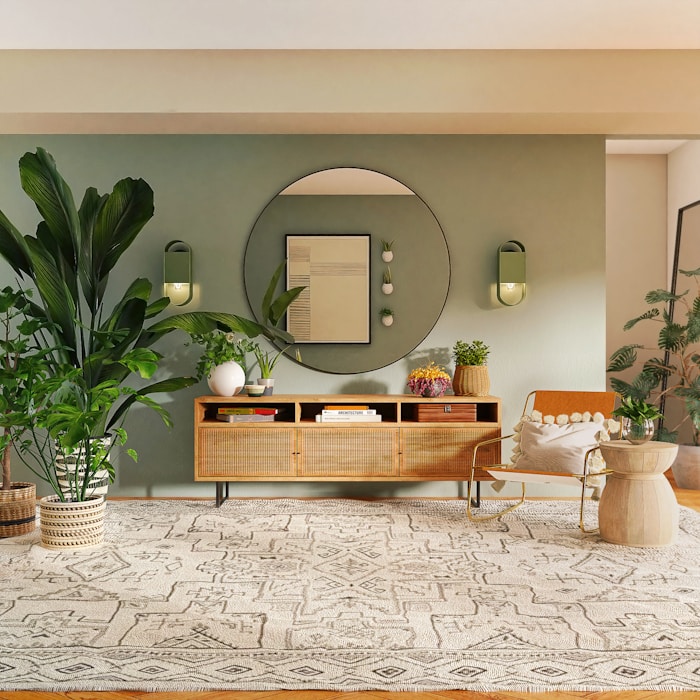
The colour performs differently across interior applications. On walls, it is transformative — reducing visual noise by eliminating the contrast between wall and furniture, making the contents of a room appear to float within a unified dark field. In textiles — curtains, upholstery, throws — it introduces depth without the commitment of a painted surface, and allows the colour to shift as the fabric moves and the light changes. In small accent pieces — vases, cushions, a single painted door — it introduces the colour's psychological register into an otherwise neutral space without overwhelming it.
Plum Noir interiors work best when they are built around the colour's natural partners. Antique gold hardware — not polished or chrome, but the oxidised, warm gold of old brass — provides warmth without competing. Ivory and parchment surfaces provide relief and allow the dark tones to register through contrast. Espresso wood tones ground the palette in natural material. And candlelight — the most ancient and most effective atmospheric lighting tool — transforms Plum Noir from a design choice into an experience.
Why Creative People Love Plum Noir
Walk through the studios, offices, and living spaces of artists, writers, photographers, and designers who have built environments that genuinely express their working identity — and Plum Noir, or its close relatives in the dark red-purple family, appears with disproportionate frequency. This is not coincidence. It reflects a specific relationship between the colour's psychological properties and the specific emotional demands of creative practice.
Creative work requires the sustained maintenance of a particular inner state — focused but not tense, open but not distracted, emotionally present but not overwhelmed. The environment in which this work happens has a direct effect on the quality of that state. Environments that are too stimulating disrupt the focused interiority that creative work requires. Environments that are too neutral or too bright create what psychologists call high-arousal states — useful for simple tasks, actively counterproductive for complex creative thinking.
Plum Noir creates what might be called a low-arousal rich environment: the darkness reduces stimulation, the warmth maintains emotional presence, the depth provides visual interest without demanding active processing. It is, almost literally, a colour designed for creative work — not by any individual designer but by the accumulated, mostly unconscious choices of people who have discovered through practice that this particular colour produces this particular working state.
Plum Noir and the Rise of Dark Romanticism
Plum Noir does not exist in isolation. It is the signature colour of a broader aesthetic movement that has been building momentum since approximately 2023 and reached full cultural visibility in 2025-2026: Dark Romanticism. Not the literary movement of the 19th century — though it draws substantially from it — but its contemporary cultural expression: an aesthetic sensibility that finds beauty in depth, darkness, emotional complexity, and the romantic past rather than in brightness, lightness, and the relentlessly optimistic forward movement that characterised so much of early 21st century aesthetic culture.
Dark Romanticism in 2026 encompasses: the Castlecore interior movement, with its commitment to stone, wood, candlelight, and the architectural grammar of medieval grandeur. The Dark Academia aesthetic that emerged from the pandemic and has continued evolving in sophistication. The Vamp Romantic trend in fashion, which positions the dark feminine archetype — independent, intellectually formidable, uninterested in conventional likability — as a design philosophy. And Plum Noir sits at the centre of all of them as their shared chromatic expression.
"The dark romantic aesthetic is not about darkness for its own sake. It is about the courage to find beauty in complexity, depth, and shadow — at a cultural moment that has become addicted to the superficial illumination of everything." — On Dark Romanticism · Cultural Analysis
The literary influences feeding into this movement are specific and worth naming. The Brontës — particularly Wuthering Heights, whose landscape of emotional extremity and passionate darkness has never felt more contemporary. Donna Tartt's The Secret History, which established the template for aesthetic intellectualism tinged with moral complexity. Mary Shelley, whose Frankenstein introduced the idea that the most interesting stories live in the space between creation and destruction. Contemporary dark romanticism in 2026 draws from all of these — and Plum Noir is their colour. Not the colour of evil, but the colour of the space where interesting things happen and conventional categories break down.

Colour Trends as Cultural Psychology
The most illuminating way to understand any colour trend is to read it as cultural symptom — as an expression of the collective emotional needs of a society at a specific historical moment. This is not mysticism. It is the same analytical move that historians make when they note that art movements emerge from the social conditions that produced them, or that economists make when they track consumer spending as a leading indicator of social confidence.
What does the emergence of Plum Noir as a dominant cultural colour tell us about 2026?
It tells us that a significant portion of the culturally influential demographic — the people who set aesthetic trends before they spread to mainstream adoption — has moved away from the desire for visibility and toward the desire for depth. The Instagram-optimised palette of the early 2020s — bright, high-contrast, immediately legible — was the aesthetic expression of a culture obsessed with being seen. Plum Noir, which rewards sustained attention and resists the casual scroll, is the aesthetic expression of a culture beginning to value being understood over being noticed.
Economic cycles and colour preference are documented correlates. Pantone's historical data shows that periods of economic uncertainty and social complexity consistently produce movement toward deep, complex colours in the blue-red-purple family — colours that provide psychological depth and emotional complexity when the external world offers neither. The post-pandemic culture of 2024-2026 has followed this pattern with textbook precision. Plum Noir is, among other things, a coping colour.
It also tells us something about the evolution of the dark feminine archetype in contemporary culture. The women and creatives driving the Plum Noir aesthetic — in fashion, in interior design, in the visual culture of literary communities and creative industries — are not adopting darkness as a form of withdrawal. They are adopting it as a form of assertion. Plum Noir is not the colour of someone who wants to disappear. It is the colour of someone who has decided that their depth is not something to manage, soften, or make more palatable. It is something to wear.
How to Use Plum Noir Without Overdoing It
The risk with any strongly atmospheric colour is saturation — using it so comprehensively that it becomes oppressive rather than evocative. Plum Noir's depth is its strength, but applied without counterpoint it can produce spaces or outfits that feel heavy rather than rich. The management of contrast and relief is the essential design skill in working with this colour.
In fashion: the most sophisticated Plum Noir dressing uses the colour as a foundation against which other elements play. Total Plum Noir from head to toe is a valid and powerful choice — but it demands high-quality materials and a confident understanding of proportion, because there is no contrasting colour to rescue poor fit or cheap fabric. More accessible is the single significant Plum Noir piece — the coat, the dress, the tailored blazer — against ivory, cream, or neutral dressing that allows the colour to register fully without competing. Gold jewellery is the most effective accessory, providing warmth that the colour's coolness does not supply for itself.
In interiors: the most effective applications treat Plum Noir as a destination rather than a background. One wall, one significant textile, one upholstered piece — these create the colour's atmosphere without enclosing the space in its darkness. If choosing to go more comprehensive — the Plum Noir room — the counterpoints become essential: ivory or parchment for surfaces, antique gold for hardware and accents, warm lamp light rather than overhead illumination, and the presence of organic material (plants, dried botanicals, natural wood) to prevent the space from feeling staged rather than inhabited.
What to Pair with Plum Noir
Colour pairing for Plum Noir follows a consistent logic: the goal is warmth, relief, and grounding. Every effective pairing addresses one of these three functions:
The Future of Plum Noir
What Plum Noir Reveals About 2026
The popularity of a colour is never just about the colour. It is about what the colour says — to the self that chooses it, to the people who observe it, to the cultural moment that finds it resonant. Every dominant colour is a collective confession: this is what we need to express right now, because it is what we need to feel, and nothing else available in the visual language of our culture quite says it.
What Plum Noir says, in 2026, is something like this: we are tired of being obvious. We are tired of the aesthetic obligation to be bright, accessible, immediately legible, relentlessly optimistic. We are interested in depth — in colour that requires patience, in spaces that reward sustained attention, in clothing that makes no concessions to the casual glance. We are, collectively, more interested in being understood than in being seen.
This is a culturally significant shift. The decade that produced Instagram, TikTok, and the aestheticisation of everyday life through constant image production was fundamentally oriented toward visibility — toward surfaces that communicated at the speed of a scroll. The emergence of Plum Noir as a dominant aesthetic colour is one signal among many that a significant portion of the culturally engaged population is moving in a different direction. Not away from beauty — into it, more deeply. Not away from aesthetic expression — toward a form of it that requires more of both the person making the choice and the person receiving it.
"Plum Noir is the colour of a culture learning, slowly and not without resistance, that depth is more valuable than visibility. That complexity, held quietly, is more interesting than spectacle announced loudly. That some things are worth the patience they require." — Colour as Cultural Psychology · 2026
The candle is lit. The velvet absorbs the light and gives nothing back cheaply. The room exists for the person inside it, not for any audience beyond the window. The colour holds its richness across every change of light, every hour, every season. It is not going anywhere.
Neither, it seems, are the people who chose it.
Comments
Post a Comment