The Psychology of Aesthetic Living — Why Your Environment Shapes Your Identity
The Psychology of Aesthetic Living —
Why Your Environment Shapes Your Identity
How the spaces you inhabit quietly write the story of who you are becoming — a psychological and cinematic exploration of environment, identity, and the invisible architecture of self.
Same Person. Two Different Lives.
Imagine the same person waking up in two different rooms. In the first, the alarm sounds into a space of scattered clothing, poor lighting, a desk buried under objects that belong somewhere else. The ceiling is flat white. The air smells of nothing in particular. The day begins in grey formlessness, and something in the body resists it — reluctant, unanchored, faintly depleted before a single thing has been asked of it.
In the second room, morning light falls through a linen curtain onto a small wooden desk where a journal waits, a plant turns its leaves toward the window, and a single framed photograph holds the wall with quiet meaning. The alarm sounds, but differently — into a space that feels considered. The body registers it. Something settles.
The same person. The same morning. The same ambitions and fears and unfinished tasks. But the emotional starting point of the day — the register in which the self begins to move — is entirely different. One room drains before the day has started. The other quietly restores.
This is not interior design philosophy. This is environmental psychology, and it is one of the most consequential, least discussed forces shaping modern life. The spaces we inhabit are not passive backdrops. They are active participants in our psychology — shaping our thoughts, our choices, our sense of self, and ultimately, the people we are quietly, steadily becoming.
"We shape our buildings; thereafter they shape us." — Winston Churchill, addressing the House of Commons, 1943
The question is not whether your environment influences you. The science is settled: it does, profoundly, and largely below the threshold of conscious awareness. The question is whether you are designing that influence intentionally — or allowing it to accumulate accidentally, like weather.
This article is about the psychology of aesthetic living. Not the aesthetics of Instagram rooms or aspirational Pinterest boards. The deeper thing: how the visual, sensory, and symbolic composition of your environment functions as an invisible architecture of identity — quietly building, or quietly dismantling, the person you are trying to become.
What Is Aesthetic Living, Really?
The word "aesthetic" has been hollowed out by its own popularity. In popular usage, it has come to mean "visually pleasing in a specific trending style" — a mood board, a colour palette, a set of props arranged for a photograph. This is aesthetic in its most superficial form, and it is not what we are discussing.
Aesthetic living, in its true sense, is the practice of designing your physical environment as an expression of your inner life — your values, your aspirations, your intellectual and emotional identity — and then allowing that environment to reflect those things back to you daily, reinforcing who you are and who you want to become.
It is not about spending money on beautiful things, though beautiful things can be part of it. It is not about achieving a particular visual style, though intentional style matters. It is about understanding that every object in your space, every source of light, every surface and scent and sound is communicating something — to your nervous system, to your unconscious self-image, to the habits and moods and choices that follow from them.
Environmental psychologists distinguish between enriched environments — spaces with meaningful objects, varied sensory input, and visual coherence — and impoverished environments, which are sparse, incoherent, or sensory-chaotic. The research consistently shows that enriched environments produce measurably better outcomes in creativity, focus, emotional regulation, and sense of self.
The misconception worth dismantling immediately: aesthetic living is not a luxury available only to those with large budgets and larger apartments. Some of the most psychologically powerful spaces in human history have been small, sparse, and inexpensive — a scholar's study, a writer's attic room, a monastery cell. What they share is not expenditure. What they share is intentionality: every element present for a reason, arranged with care, holding meaning beyond its material form.
That intention is available to everyone. The question is whether you apply it.
The Science of Environmental Psychology
Environmental psychology — the formal study of how physical spaces affect human behavior and emotion — has been accumulating evidence since the 1960s, and its findings are both consistent and striking. The built environment is not neutral. It is not a container that holds human activity unchanged. It is an active variable in every psychological equation involving mood, cognition, behavior, and identity.
Roger Ulrich's landmark 1984 study found that hospital patients recovering from surgery who had a window view of trees left the hospital faster, required less pain medication, and received better nursing evaluations than patients looking at a brick wall. The rooms were otherwise identical. The single variable — what the eyes could see — produced measurable differences in biological healing rates. This is not metaphor. This is physiology.
The mechanism is partly attentional: our brains are constantly scanning the environment for cues about what kind of situation we are in and what kind of self is appropriate to that situation. A cluttered, chaotic space signals cognitive overload. A calm, ordered space signals safety and competence. A space with meaningful personal objects activates self-concept and identity. A sterile, impersonal space produces what psychologists call psychological non-place — a sense of being nowhere in particular, of belonging to nothing specific.
What Environmental Psychology Has Proven
Decades of controlled research have established the following causal relationships between physical environments and psychological states:
- Natural light improves mood and focus by 15–25%
- Ceiling height affects abstract thinking ability
- Clutter measurably raises cortisol levels
- Color temperature influences decision-making speed
- Meaningful objects activate self-concept and identity
- Ambient sound shapes cognitive performance
- Plant presence reduces stress markers by up to 37%
- Order in the environment predicts self-regulation success
- Room scent influences memory consolidation
- Aesthetic complexity correlates with creative output
Perhaps most significantly for our purposes: environments function as behavioral cues. The presence of running shoes by the door increases the probability of exercise. Books on a visible desk increase the probability of reading. A journal left open on a writing table increases the probability of writing. The objects we surround ourselves with are not passive — they are invitations, nudges, architectural suggestions about what kind of person we might be right now, in this space, today.
This is why aesthetic living is really a form of behavioral design. You are not decorating a room. You are constructing a system of environmental cues that will influence your choices, your moods, your habits, and your self-image across thousands of ordinary days.
Why Spaces Change Mood
Walk into a room with high ceilings and diffuse natural light and something shifts in the body before the mind has registered anything consciously — a slight opening, a loosening of whatever had been held compressed by the smaller space you left behind. Walk into a room with bare bulbs and no windows and the opposite happens: something contracts, narrows, prepares for difficulty.
These responses are not learned. They are ancient. The human nervous system evolved to read environments for safety, resource availability, and social belonging, and it does this continuously, at a speed and depth that far exceeds conscious processing. By the time you consciously notice that a room feels good or feels wrong, your limbic system has already been running that assessment for several seconds.

Lighting is the most potent atmospheric variable. Warm light at low angles — the light of candles, of lamps placed at desk height rather than overhead — signals safety and intimacy, evolutionarily associated with shelter and the social warmth of fire. Cool overhead fluorescent light signals the opposite: public space, institutional function, places where rest is not permitted. The emotional difference between these two lighting conditions is not subtle. It is the difference between home and institution.
Colour operates through both cultural association and direct neurological pathways. Warm tones — ochre, terracotta, burgundy, deep green — produce measurably lower anxiety responses than cool tones in contexts of rest and reflection. Saturated colours stimulate, muted tones calm. The quiet luxury aesthetic — warm white walls, natural wood, muted sage and taupe — has become culturally dominant partly because it produces an almost reliable psychological effect: a sense of considered calm, of life being lived without urgency or noise.
Texture is underestimated. The tactile quality of a room communicates through sight before touch — rough linen, worn leather, smooth stone, soft wool all carry emotional associations that are activated visually. A room of exclusively hard, smooth surfaces reads as cold and institutional regardless of colour or lighting. The presence of textile — a woven throw, a linen cushion, a rough-woven basket — introduces the visual frequency of warmth and organic softness that the nervous system reads as comfort.



Your Environment Becomes Your Identity
There is a concept in psychology called behavioural residue — the traces that personality leaves on physical space over time. Psychologist Sam Gosling found that observers shown photographs of strangers' bedrooms and offices could predict those people's personalities with remarkable accuracy — not just broad traits like introversion or conscientiousness, but nuanced aspects of identity that the people themselves might struggle to articulate.
The space you live in is not a neutral record of your choices. It is a portrait of your identity — assembled gradually, unconsciously, through thousands of small decisions about what to keep and what to discard, what to display and what to hide, what to invest in and what to ignore. And that portrait, once assembled, reflects back to you continuously, reinforcing the self-concept that created it.
This is why environments are so difficult to change even when we know they are not serving us. They are not just spaces — they are accumulated self-definitions. To change the room is to risk changing the self, and that is psychologically significant work, not mere rearrangement.
"Tell me what your space looks like, and I will tell you what you believe about yourself — not what you say you believe, but what you actually, daily, demonstrate." — On Identity and Environment
Conversely, intentional changes to the environment can precede and catalyse changes in identity. Placing books you want to read in visible, accessible positions communicates to yourself: I am someone who reads. Clearing a desk and leaving only essential tools says: I am someone who creates without distraction. Adding a plant says: I am someone who tends, who attends to living things, who makes space for growth.
These are not decorative statements. They are identity claims, made in the language of physical space, received subconsciously, and over time, believed. The environment becomes the externalized argument for who you are — and you, encountering it daily, slowly accept the argument.
The Psychology Behind Aesthetic Choices
Every aesthetic is a psychological hypothesis. When someone chooses minimalism, they are not simply choosing clean lines and empty surfaces — they are choosing a belief about what clarity feels like, about what is worth keeping, about the relationship between ownership and freedom. When someone chooses dark academia, they are choosing intellectual identity, romantic nostalgia, and the belief that beauty and knowledge are not separate things. The aesthetic is the outer expression of an inner philosophy.
- Minimalism → Freedom through restraint
- Dark Academia → Intellectual romanticism
- Quiet Luxury → Confidence without declaration
- Cottagecore → Organic slowness, simplicity
- Industrial → Raw authenticity, anti-pretension
- Maximalism → Abundance, self-expression
- Japanese Wabi-Sabi → Beauty in impermanence
- Minimalism → Reduces decision fatigue
- Dark Academia → Anchors intellectual identity
- Quiet Luxury → Regulates security and calm
- Cottagecore → Counters overstimulation
- Industrial → Asserts non-conformist identity
- Maximalism → Externalises inner richness
- Wabi-Sabi → Cultivates acceptance and peace
The aesthetic trends that dominate cultural attention at any moment are almost always responses to something — anxiety, overstimulation, disconnection, longing. Quiet luxury emerged in the mid-2020s at precisely the cultural moment when maximalist social media aesthetics had become exhausting and people began longing for calm. Dark academia surged during the pandemic, when physical access to universities, libraries, and intellectual communities was severed, and the aesthetic became a way to maintain connection to those identities from the solitude of a bedroom.
Research by psychologist Carolin Häfner found that people under threat to their self-concept — when they feel their identity is unclear or under pressure — actively seek out and arrange objects and environments that reinforce their valued self-definitions. The aesthetic choice is frequently not about beauty at all. It is about psychological stability.
Understanding this helps us move beyond aesthetic as fashion. You are not choosing a look. You are choosing, through your environment, to reinforce a set of beliefs about who you are and who you are capable of being. The choice deserves to be made consciously, with knowledge of what you are actually doing.
Why Clutter Creates Mental Friction
Clutter is not a moral failing. It is a cognitive tax. Every visible object in your environment makes a small demand on your attention — requesting categorisation, triggering associations, pulling at the edges of working memory. A single cluttered desk surface can be generating dozens of these micro-demands simultaneously, long before you sit down to do any actual thinking. By the time you attempt focused work, your attention has already been fractured across a room's worth of unresolved visual information.
Neuroscientists at Princeton's Neuroscience Institute found that multiple objects in the visual field compete for neural representation in the brain's visual cortex. Physical clutter limits the brain's ability to focus and process information, and increases cognitive load and stress. This is not a lifestyle opinion. It is a finding about how the visual processing system works.
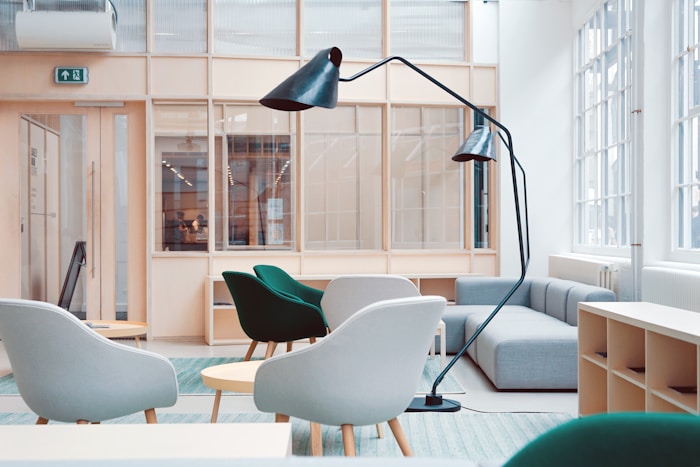
But the problem with clutter goes beyond cognitive load. Physical disorder is associated, in environmental psychology research, with a sense of diminished self-efficacy — the feeling that you are not in control of your environment and, by extension, not in control of your life. This connection between external disorder and internal helplessness is well-documented and bidirectional: disorder creates a feeling of overwhelm, and a feeling of overwhelm tends to produce more disorder.
The opposite is equally true. Small, deliberate acts of environmental order — a cleared desk, an organised bookshelf, a bedroom tidied before sleeping — have been shown to increase self-control in subsequent unrelated tasks. The physical act of bringing order to a space reinforces the psychological sense of being someone who exercises agency, who decides what belongs where, who maintains the environment rather than being managed by it.
Aesthetic living, understood properly, is not about achieving pristine spaces. It is about maintaining enough environmental order that your space amplifies your capacity rather than competes with it — leaving room, literally and cognitively, for the thinking and creating and being that you want to do.
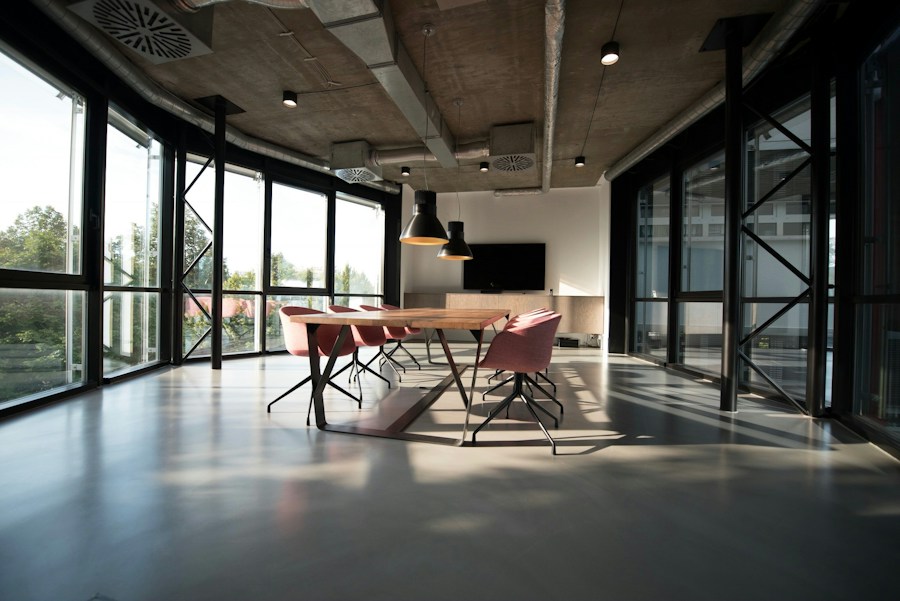

The Power of Visual Storytelling
Spaces tell stories. Not the stories their inhabitants consciously intend — but the deeper, more honest stories visible in what is kept and how it is displayed, what hangs on walls and what gathers dust, which books face outward and which face the shelf, what photographs are framed and where.
Objects carry what psychologists call symbolic self-completion — they function as external symbols of the identities we hold or aspire to. The person who displays their books is not simply storing them conveniently; they are making a visible claim about a relationship with reading, with ideas, with the kind of person who values those things. The person who frames a travel photograph is not merely decorating; they are keeping alive the self who went somewhere, who was curious, who moved through the world with intentionality.
The Psychology of Meaningful Objects
Every object in a space functions as a psychological statement. Consider what each category of object reinforces about identity and self-concept:
- Books → Intellectual identity, curiosity
- Art → Aesthetic values, cultural reference
- Plants → Care, attentiveness, growth
- Photographs → Relational identity, memory
- Handmade objects → Appreciation for craft
- Collected objects → Personal history, travel
- Musical instruments → Creative aspiration
- Writing tools → The identity of a writer
- Candles → Ritual, intentionality, slowness
- Empty space → Confidence, simplicity
This is why the instruction to "decorate with things you love" is both correct and incomplete. What matters is not just that you love the objects — it is that the objects reinforce the aspects of your identity that you want to grow. A space curated around who you were ten years ago is a beautiful museum of a self you have outgrown. A space curated around who you are becoming is an invitation that you accept daily.

Sensory Living and Emotional Wellbeing
We speak of beautiful spaces primarily in visual terms, but the full psychological power of an environment is delivered through all five senses simultaneously. To design only for the eyes is to reach half the instrument.
Scent is the most potent and most underused sensory dimension of home environments. It operates through the olfactory bulb — the only sensory system with direct, unmediated access to the limbic system, the brain's emotional and memory centre. This is why a specific smell can retrieve a memory with a completeness and emotional vividness that no visual or auditory cue can match. It is also why the ambient scent of a space shapes mood and behaviour more directly, and more immediately, than almost any other environmental variable.
"A room that smells of cedar and old paper and something faintly floral creates a specific emotional frequency — warm, intellectual, slightly nostalgic — that no amount of careful visual design achieves alone." — On Sensory Environments
Sound architecture is equally significant. The acoustic character of a space — whether it echoes or absorbs, whether it carries ambient music or holds silence, whether outside sounds intrude or are filtered — shapes concentration, emotional state, and the quality of thought that occurs within it. Research by Ravi Mehta at the University of Illinois found that moderate ambient noise — approximately 70 decibels, the level of a busy café — enhances creative cognition compared to both silence and loud environments. This is why the café has always been a favoured workspace of writers: its soundscape is accidentally optimal for a certain quality of thinking.
Temperature and texture have measurable psychological effects that most people attribute to personality rather than environment. People in warmer rooms make more generous judgments about strangers. People holding warm objects report stronger feelings of interpersonal connection. The texture of a surface touched briefly can influence risk tolerance and negotiation behavior. The body is not separate from the room it inhabits — it is in continuous, reciprocal conversation with it.
Intentional sensory living means attending to all these dimensions: the quality of light at different hours, the scent that greets you at the door, the sound environment you create or allow, the textural variety of surfaces and materials, the temperature of the spaces where you think and rest and create. These are not luxuries. They are the raw material from which daily emotional experience is constructed.
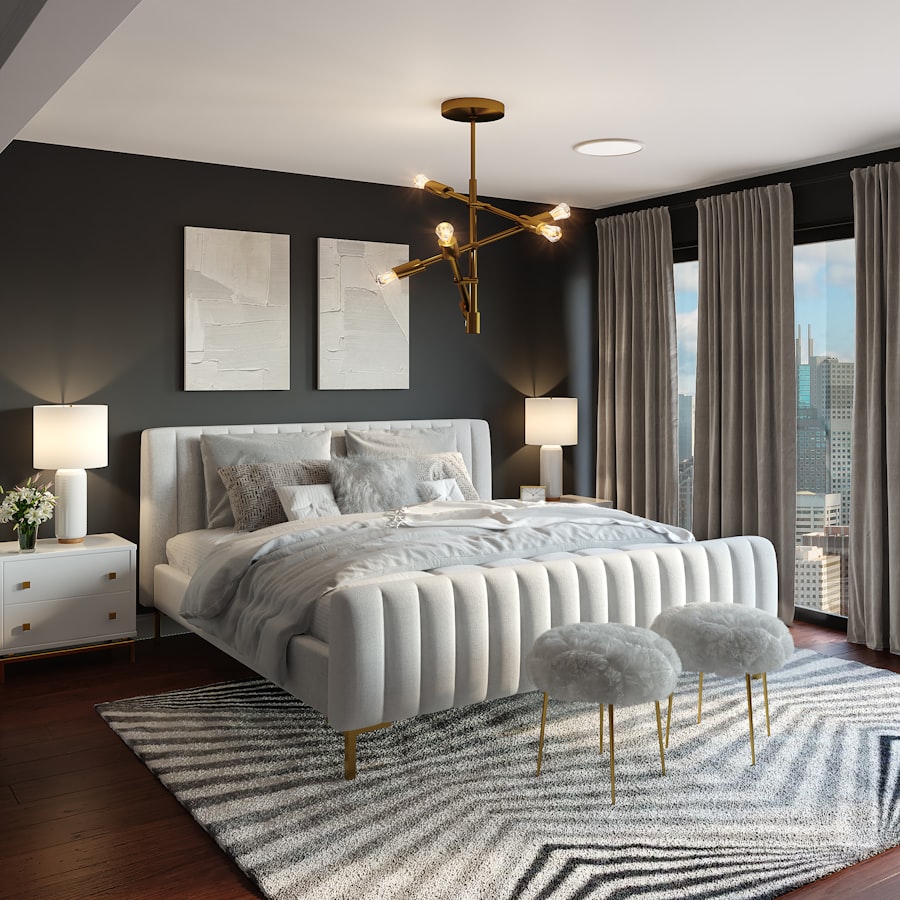

Social Media Aesthetics vs Real Aesthetic Living
It is worth being honest about the distortion that social media introduces into the conversation about aesthetic living. What platforms like Pinterest and Instagram have done, at their best, is make environmental psychology accessible — demonstrating through images that spaces can be beautiful, that arrangement matters, that the visual quality of daily life is worth attending to. This is genuinely valuable.
What they have also done, at their worst, is commodify intentional living into a performance — transforming the question of "what environment serves my actual life?" into "what environment photographs like a life worth admiring?" These are very different questions, and confusing them produces spaces that are beautiful as images and hollow as experiences.
- Designed for the camera, not the inhabitant
- Trend-driven, externally validated
- Objects chosen for appearance, not meaning
- Identity borrowed from influencer culture
- Feels staged; is exhausting to maintain
- Chases aesthetics that belong to other lives
- Designed for the person who lives there
- Value-driven, internally validated
- Objects chosen for meaning and resonance
- Identity expressed rather than constructed
- Feels restoring; is sustainable over time
- Reflects the life actually being lived
The most psychologically powerful spaces are almost never the most Instagrammable ones. They are the spaces layered with genuine time and genuine meaning — where the worn book spine and the faded photograph and the slightly imperfect arrangement of collected objects tells an honest story about a real human being. These spaces are often unphotographable precisely because their power is atmospheric, temporal, and sensory — because they smell of something specific and hold the memory of specific evenings and specific thoughts.
The invitation here is not to abandon visual inspiration — reference is valuable, and beauty in others' spaces can awaken our sense of what's possible in our own. It is to use that inspiration as a starting point rather than an endpoint. To ask not "how do I make my space look like this?" but "what does this image make me feel, and how might I produce that feeling in my own life, through objects and arrangements that are genuinely mine?"
Designing Spaces That Support Growth
The most sophisticated application of environmental psychology is designing spaces not for the person you are, but for the person you are in the process of becoming. This requires a kind of forward projection — identifying the habits, the values, the creative practices you want to develop, and then deliberately constructing the environmental cues that will support them.
This is not wishful thinking made physical. It is what behavioural scientists call implementation intention architecture — the design of environments to reduce the friction of desired behaviours and increase the friction of undesired ones. The person who wants to write places a notebook and pen on the kitchen table before bed. The person who wants to read places a book on the pillow. The person who wants to meditate arranges a corner of the room specifically for that purpose, with only the objects required by that practice.
James Clear's research on habit formation, synthesised in the concept of environment design, shows that the single most reliable predictor of habit success is environmental friction. Habits that require you to navigate obstacles — finding a book buried under other items, setting up a workspace each morning — fail at dramatically higher rates than habits supported by pre-arranged environmental cues. Your environment is either working for your growth or against it. Rarely is it neutral.
A reading nook — even a single armchair positioned near a lamp with a side table at the right height — increases reading frequency significantly more than a bookshelf on the other side of the room. Not because the armchair is more comfortable than a bed, but because it is a designated space with a single purpose, and designated spaces train the brain to enter specific cognitive and emotional states on arrival. The reading nook teaches the body: here, we slow down. Here, we attend. Here, the book is what we do.
Design your environment to argue, daily and silently, for the life you want to live. Make the good habits effortless and the distracting ones slightly inconvenient. Let the space carry as much of the motivational weight as possible, because motivation is finite and environments are continuous.
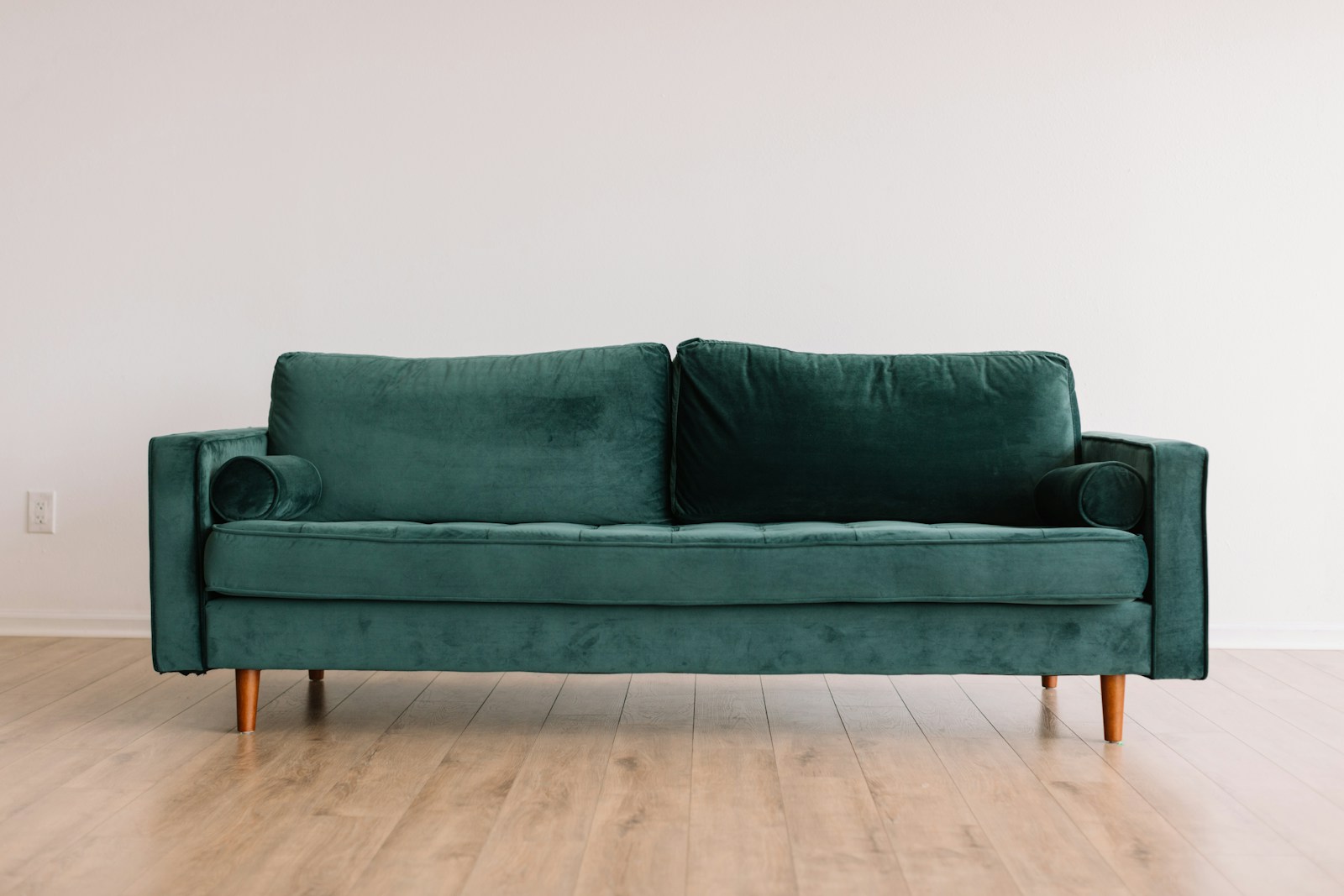
Why Beautiful Spaces Feel Powerful
Beauty is not a luxury. This requires repeating, because contemporary culture has done significant work to make us believe otherwise — to frame aesthetic attention as vanity, aesthetic investment as indulgence, the desire for beauty in daily life as something to be embarrassed about or justified with elaborate productivity rationales.
The evidence disagrees. Exposure to beauty — in architecture, in nature, in the visual quality of lived environments — produces measurable effects on emotional regulation, stress response, prosocial behaviour, and cognitive performance. People in beautiful spaces are measurably more generous, more creative, more optimistic, and more likely to treat others with care. Beauty is not decorative. It is functional, deeply and thoroughly, in ways the research has only recently begun to document.
"Beauty is not an optional addition to a serious life. It is a nutrient — something the human mind requires to function at its fullest, most humane, most capable dimensions." — Elaine Scarry, On Beauty and Being Just
The emotional regulation effects of beautiful environments are particularly significant. Spaces that the occupant finds beautiful — and this is individual, not universal; the neuroscience of beauty is personal before it is cultural — activate the brain's reward circuitry in ways that reduce anxiety, restore depleted attentional resources, and improve mood through multiple independent pathways. This is why returning to a space you have made beautiful feels restorative in a way that returning to a neutral or chaotic space does not.
Investing in the beauty of your daily environment is, therefore, not an indulgence. It is an investment in your emotional capital — in the quality of daily experience from which all other capacities are ultimately drawn. The person who lives in a beautiful space, by their own sincere aesthetic standard, arrives at every challenge with a slightly fuller internal reserve than the person who does not. Over years and decades, that difference compounds into something significant.
Building an Environment That Reflects You
The practical question, after all of this, is simple and significant: how do you begin building an environment that genuinely serves and reflects your identity, rather than one assembled accidentally or borrowed from someone else's aesthetic vision?
Begin with values, not objects. Before purchasing anything or rearranging anything, ask: what do I want my life to feel like, inside these walls? What kind of thinking do I want to do here? What kind of person do I want to be reinforced into being every morning when I enter this space? Write the answers down. They are the brief from which your environmental design should proceed.
How to Build a Space That Serves Your Growth
A four-question framework for designing environments with genuine psychological intentionality:
- What feeling do I want this room to produce?
- Which objects reinforce who I am becoming?
- Where are the friction points blocking good habits?
- What does this space say about me that I no longer believe?
- What sensory elements am I neglecting?
- Does this space feel like mine, or like a performance?
- What would I add if cost were no obstacle?
- What would I remove without losing anything of value?
Proceed by subtraction before addition. The most common error in environmental design is the belief that improvement requires addition — more things, new things, better things. Almost always, clarity emerges first through removal: of objects with no meaning, of furniture that fills space without serving experience, of visual noise that competes with what deserves to be seen. The cleared surface is not absence. It is preparation.
Then add intentionally, slowly, and with the question always present: does this serve the life I am trying to build, or the image of that life I want to project? These are different things. The first adds genuine value. The second is an expensive form of self-deception.
Allow the space to evolve. A truly inhabited environment changes as its inhabitant changes — acquiring objects of growing significance, releasing objects of diminishing meaning, rearranging as the purposes of life rearrange themselves. A space that has not changed in five years is either perfectly designed or quietly stagnant. Only you can know which.

Becoming the Person Your Environment Believes In
Every morning you wake up in a room that has an opinion about you. It may be an encouraging opinion — spoken in the language of warm light and chosen objects and spaces that support the things you value. Or it may be a discouraging one, delivered through clutter and chaos and the accumulated evidence of a life managed rather than designed.
The extraordinary, slightly unsettling truth of environmental psychology is that these environmental opinions become, over time, your opinions about yourself. The room that suggests you are capable and creative and worthy of beauty gradually produces a self that believes those things. The room that suggests you are overwhelmed and provisional and not quite settled gradually produces a self that believes those things too.
You are always, in the deepest possible sense, a product of your environment. Not because you are passive, but because the boundary between self and space is far more permeable than the modern emphasis on inner willpower and individual character would have us believe. The environment is not separate from the psychological work of becoming. It is part of the work. It is, in fact, the part of the work that continues without any effort from you — silently, continuously, in every ordinary moment spent inside it.
"The life you want is not waiting somewhere else. It is already present in the spaces you have the courage to design — honestly, beautifully, in full service of the self you are committed to becoming." — On Aesthetic Living and Identity
So rearrange the lamp. Clear the desk. Put the book where you will find it. Frame the photograph that holds something true. Remove what belongs to someone you have stopped being. Add what speaks to who you are not yet, but intend to be.
Design the space as if your life will be shaped by it — because it will. Because it already has been, and always will be, in ways both subtle and profound.
The room is not the background to your life. It is one of its most important authors. Give it the kind of material worth writing with.
Comments
Post a Comment